

Critter Cavern
For my cyanotype exhibit, I wanted to pay homage to Anna Atkins and her work with botany while also connecting it to Toronto and my own family traditions. It was an ambitious mix, and parts changed along the way, but that is essentially what nature and cities have in common. Always changing and evolving with whatever is thrown at it.
“Critter Cavern” is a portal-like experience to when Toronto was not the industrial city we know today. This piece is built to reflect when Toronto was still farmland used by both settlers and Indigenous peoples. Back when we lived off the land and saw exactly what we ate daily. When trees were our shade and grass our carpet. Having grown up in Nova Scotia, I took the nature and greenery for granted while I had it, and it’s one of the things I miss most about home. While we have green spaces and parks in Toronto, it’s not the same feeling as walking by local farms and waving at the mainland from across the Strait on Cape Breton Island, cursing the Mulgravers as a hurricane brews in the distance. With this exhibit, my goal is to have viewers pause and think about how we really got here. How the city went from greenery to concrete. Take in what was, and hopefully allow us to see what could be.
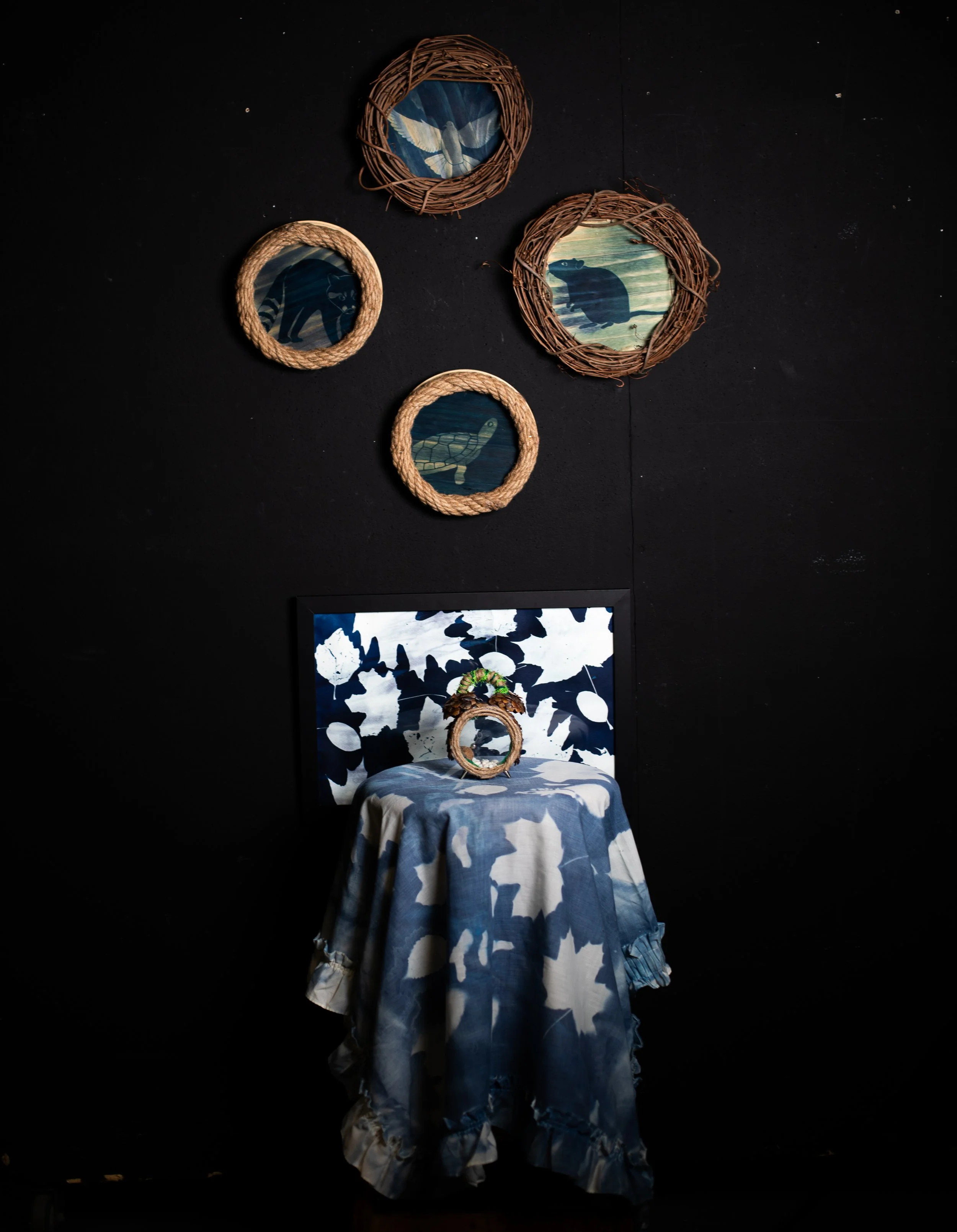
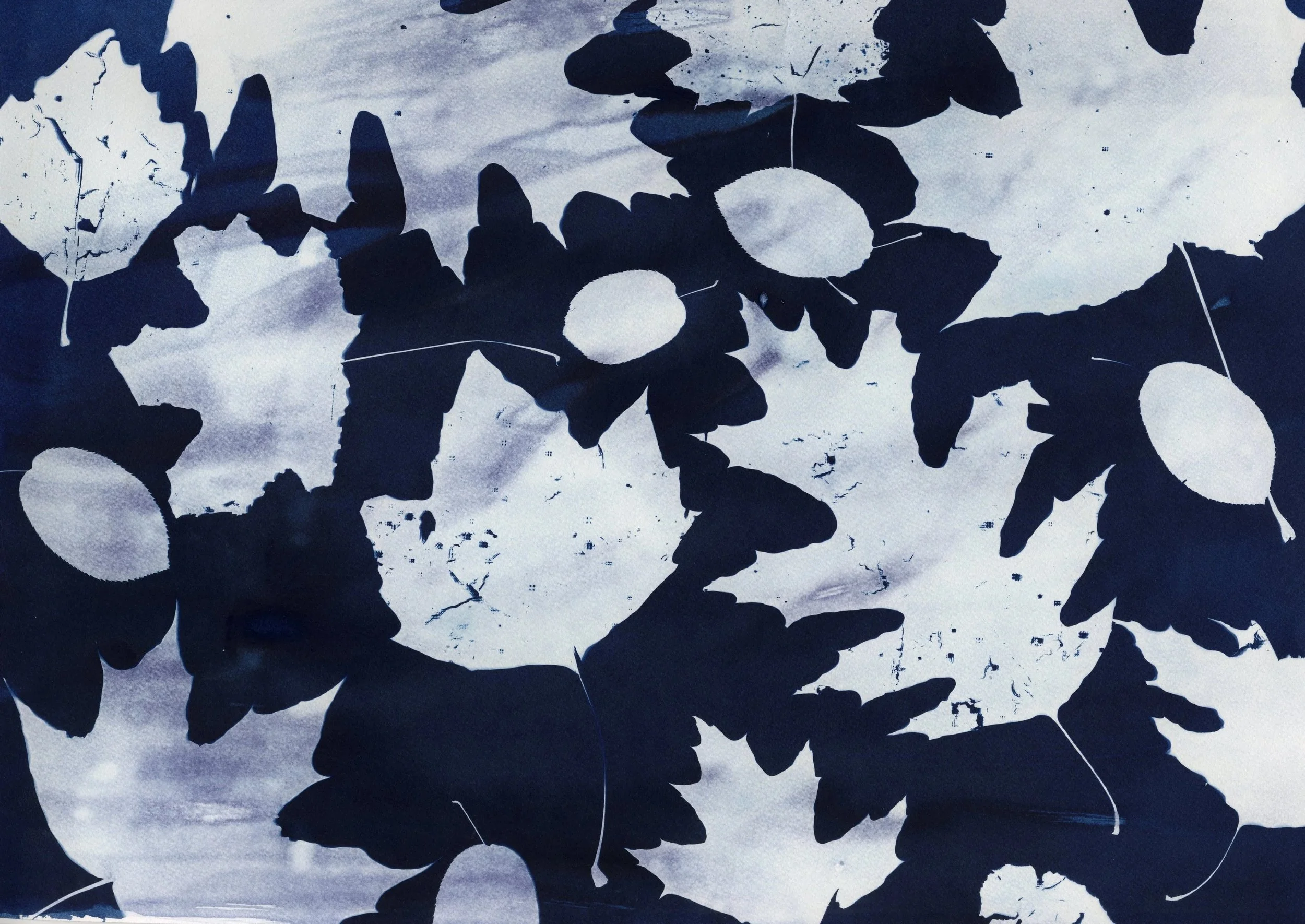
Large paper print - Falling Leaves
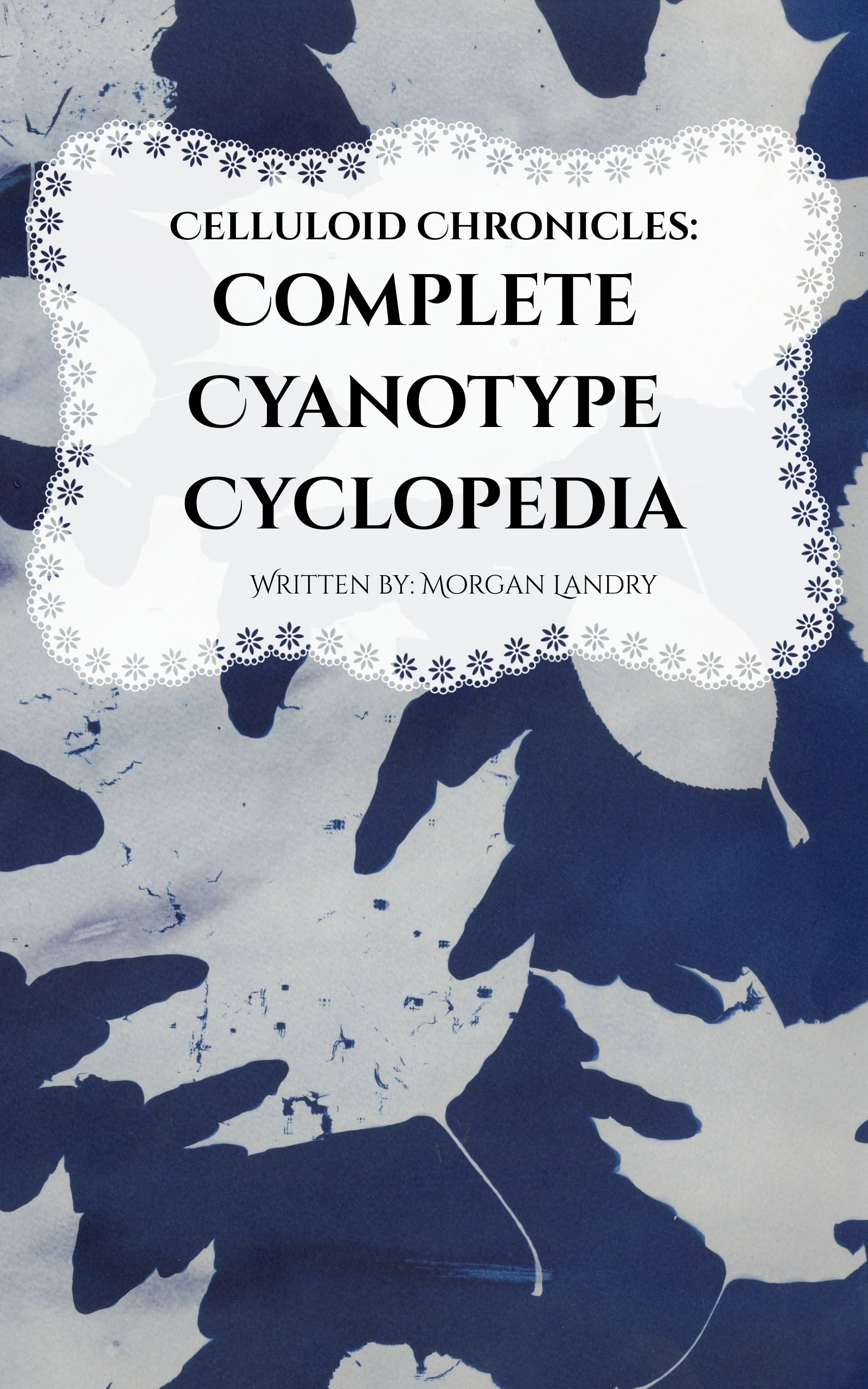
The large Falling Leaves print was created to be a background for the fairy house display, but it has grown into a work of its own. The paper I used was given to me by the Toronto Metropolitan University Digital Printing Facility from their scrap and reject pile, since it had been bent and was no longer suitable for professional prints. The leaves were found outside in the TMU Kerr Hall Quad at the start of autumn. The leaves had not dried out yet, but they had fallen to the ground, meaning I could collect them without disturbing the natural abscission process. The leaves were laid out around the coated paper and covered with a sheet of glass to hold them in place as they sat in the UV exposure unit. After 50 minutes in the exposure unit, I carefully removed the paper, leaves, and glass sheet from the unit and began washing the print, then hung it to dry on a clothesline. Once dry, I fitted it with a frame I had found at a thrift store. This is the image on the cover of this book!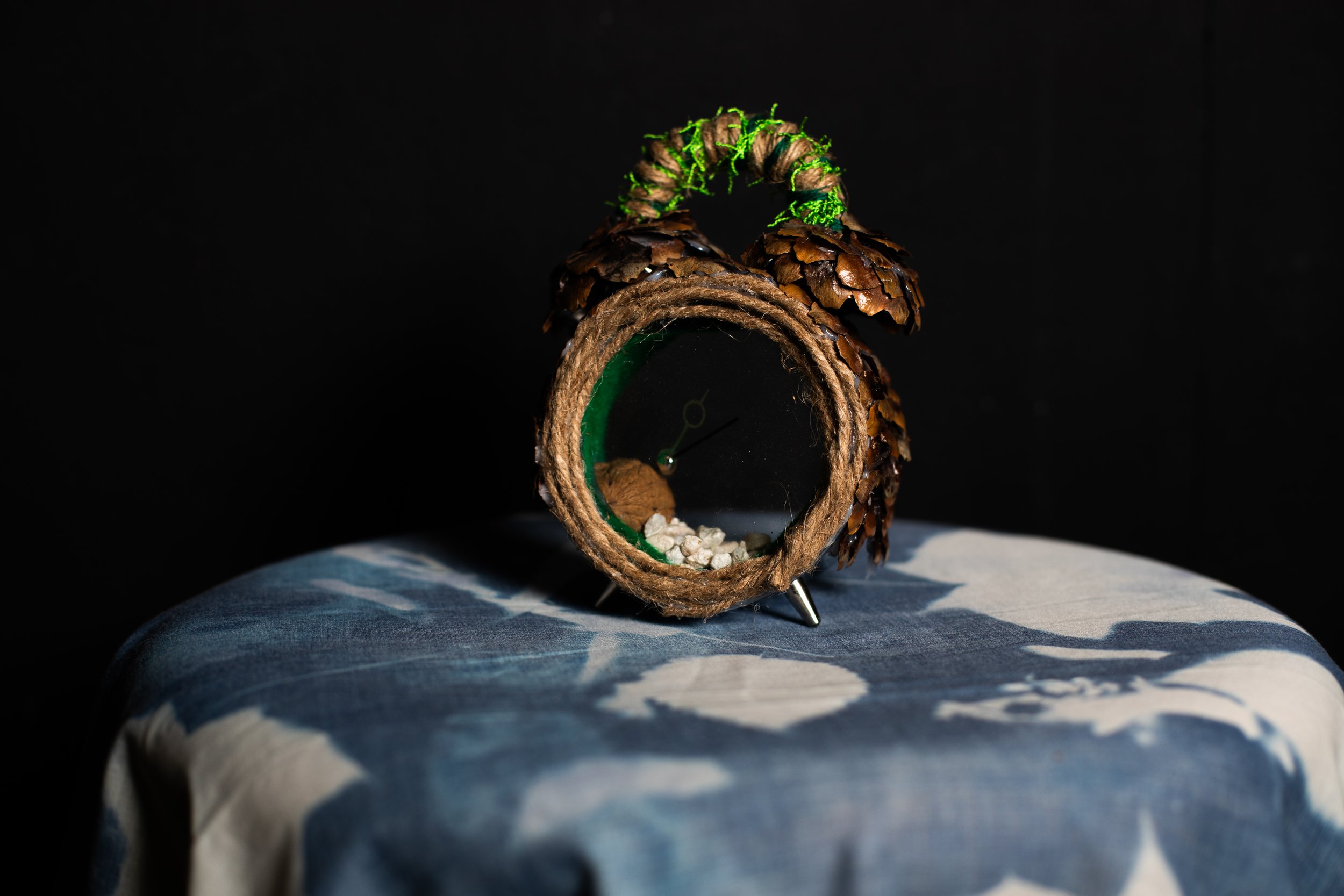
The Fairy House
The fairy house was one aspect I really wanted to incorporate into the final piece. While all the prints on display are 2-dimensional, I wanted a 3D element to enhance the overall exhibit. While different cultures and communities tell the story differently, I was taught growing up that fairy houses were made as a place for fairies to live; they protect the garden from harm. They come out when no one is looking and ensure the plants are cared for when the humans are away. The more fairy houses, the more fairies will move in, and the community grows. In Nova Scotia, we deal with massive snowstorms, hurricanes, floods, and heat waves, so the idea that we had fairies watching over our crops and doing the best they could to protect them was reassuring. My family and I would paint and decorate little wooden houses and leave them scattered around the gardens to make accommodations for these fairies as a family tradition. The house was built out of an old clock I found at a thrift store that was then gutted and cleaned to act as a frame. The whole outside was covered in pinecone scales I collected and hand-picked off to create a wooden siding style look. On the inside, I added green felt to act as a base of grass. Using old aquarium rocks, I made a small pathway that led from the front of the glass to the back of the clock. I also added a chestnut shell to be a smaller house with the hands of the clock acting as a weather vein. The back of the clock is a cyanotype print of lace to be the custom wallpaper. Finally, the fairy lights inside the clock make the home more visible and bright. On the exterior, I used twine to create a more focused frame to the glass and used a mix of twine and wool to create a wooden vine-like appearance for the clock's handle.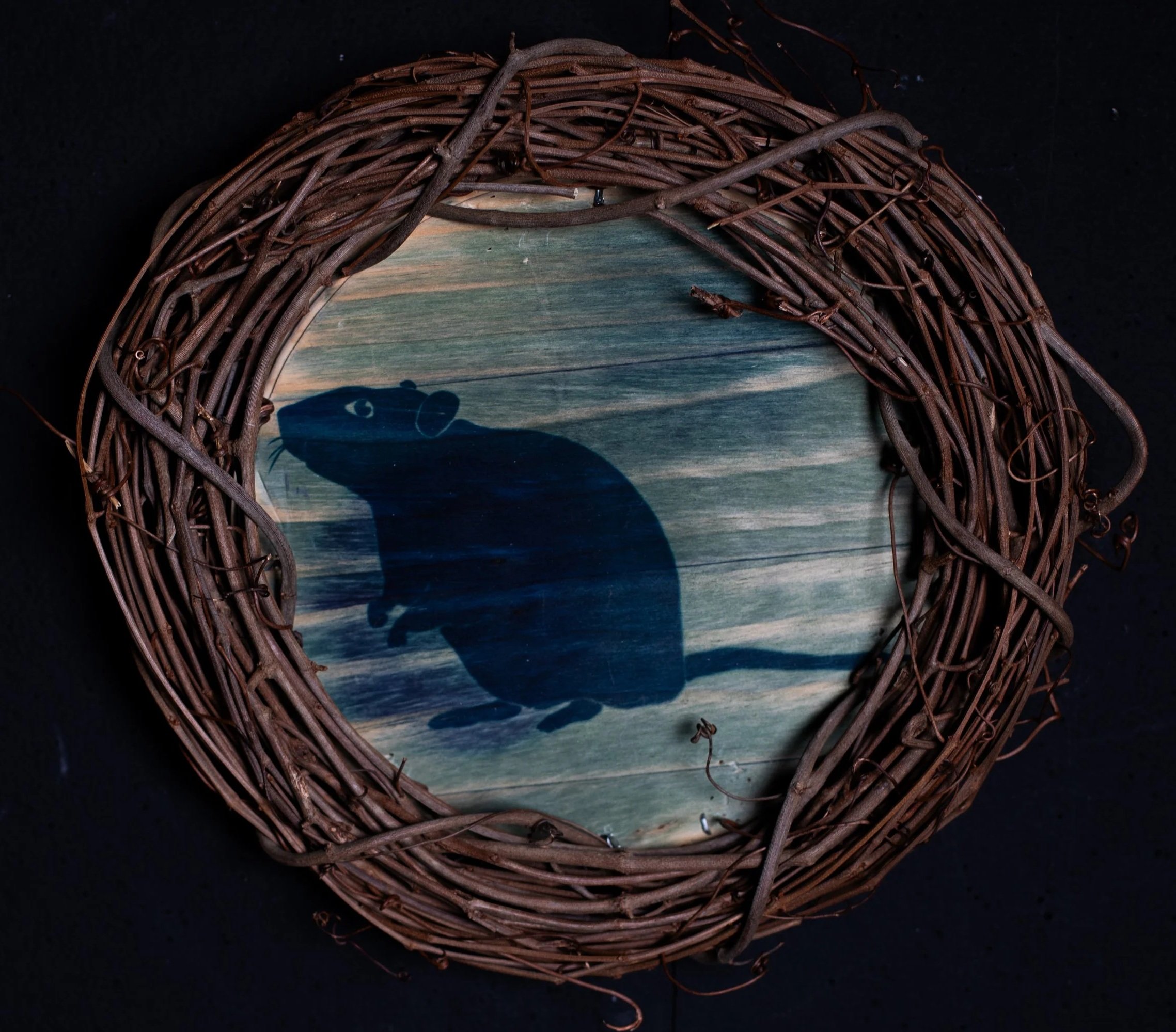
The Complete Cyanotype Cyclopedia
Embark on a journey of science, history, and how-tos in the Celluloid Chronicles series’ first installment, The Complete Cyanotype Cyclopedia. Also known as solar printing, the Cyanotype photographic printing process has been around since 1842, serving both as a literal and figurative blueprint for modern-day photography. The colourful history of this monochrome printing process involves simple chemistry mixing that is easy and accessible for beginners. A forgiving developing process that makes starting from scratch a breeze, and a fascinating history that involves astronomy, botany, as well as a female author and scientist getting the recognition she deserves. Enjoy a book that mixes historical, scientific, and educational genres in a creative way that will not only teach but also entertain.